Showing posts with label Gardening. Show all posts

Wednesday, November 14, 2012

Johnny Appleseed

John Chapman was not yet 2 years old when his mother died during childbirth with her third child. His father remarried and he and his second wife had 10 more children. This family of fourteen lived in a poor small home. His father worked three jobs to support them all. John spent much time outdoors exploring the country just to get away from the too crowded home.

Apple cider was a common drink during that period. During the harvest time people would take their apples to the community cider presses where all the juice would be taken out. The seeds and pulp were discarded and Johnny found that he could have them for free. Who would know that free apple seeds would be the beginning of an American legacy? John's mission was one that made American history and still has valuable lessons for today. It started with dreams of apple orchards throughout the land providing food for the new settlers who were moving out west.

At the age of 23 John left the area of his family in Pennsylvania and set out on his own. As the oldest son this would have been an extraordinary move as he would have probably been a big part of helping his parents provide for his younger brothers and sisters. He took not much more than the clothes on his back, a bag of food, and a bag of apple seeds. The year was 1797.

Johnny started walking through the unsettled land. When he found a good spot he would plant an orchard and then move on. Mile after mile he travelled and at some point in his journey he met a young girl with no shoes and he gave her the only pair he had. In order to show their gratitude the family gave him a cooking pot that Johnny wore on his head to protect himself from the elements. On he went planting more orchards along the way and surrounding them with fences made of sticks. He would make the rounds of the various orchards to check their progress and nurture them along the way. When he met travellers he would often give them some seeds so they could take them further West and plant them where they settled.

We know that Johnny covered Pennsylvania, Ohio, and Indiana and bought land to maintain his own orchards. Some stories say he went much farther West but others count that as embellishment of the events. John Chapman was a vegetarian and became an expert in medicinal medicine. At one point he came across an injured Native American, treated the wounds, and carried him on his back to his tribe. As the son of the chief of the tribe this act of kindness went a long way to improve the relationships between the Native Americans and the whites. Johnny Appleseed was welcome wherever he went.


Some of the significant lessons from the life of Johnny Appleseed:
  • Even in extreme poverty our lives can make a difference that will go far beyond our years.
  • Did you notice that Johnny used the free seeds from the cider mills? Look around for your own seeds to begin your small business.
  • He worked in harmony with nature instead of stripping it. Had he lived in this generation he could have been the spokesman for the Green movement and made a fortune in speaking engagements.
  • Johnny combined business with a great love for people thus benefiting all.
There is more to the story and I hope you will rush right out to the library and find out the rest. Don't forget the children's and young adult sections which often have some of the best history books and of course you can actually share them with your kids too!

Photos from google.
First posted October 17, 2010

Sunday, September 9, 2012

Self-Sufficiency on 5 acres

The conversation started about food.  I mentioned that since moving to the city I could tell that the food I was eating was making me feel horrible and I'm putting on weight.  Remember, for years I lived in a rural community and was able to raise some of our own meat supply and had some locally grown produce.  All meals were cooked from scratch with the basics of meat and potatoes.  Now my meals are often fast food or processed food.  It meets the budget and the schedule but I often have cravings for good pot roast with gravy and mashed pototoes.  As we continued with the conversation it came back to my desire to get back to "living off the land".  I had not reached my goals yet but miss so many things about the lifestyle I loved and take each step forward hoping it will lead me back.

In 1988 when I first moved to the rural community I would take walks and everywhere I went people would wave at me.  It was so strange after living in the Seattle area all my life.  Seattle is also a very friendly city but not nearly as outgoing as what I was now experiencing.  I would smile and wave back all the while a little puzzled.  Grocery shopping was also a bit strange.  Whenever I shopped people were stepping aside moving out of my way.  It took me a while to realize it and then of course I wondered why.  After consideration I laughed when I realized that I approached my grocery shopping like a mad woman on busy mission.  Others sensing my hurry would give me room to zip down the isles.  I slowed down after that and started to move with the flow of shopping cart traffic.

Many had moved to the community around the same time I did.  There was a new emphasis on self-sufficiency, homeschooling, and everything country which I didn't know was happening as my move had been made purely for economic necessity.  More on this story in previous posts and the In The Trenches book.

After the food conversation and my recent trip back to the area my mental engine and longing has been revved up.  Everything in the news indicates that that there are very good reasons why one might want to be out of the cities now or in the near future.  Just out of curiosity I checked realtor.com to see what a five acres and a home would run.  Notice that I like most country people list the acres or barns first and the house is a bonus to the deal.  In many rural communities the homes are 100 years old.  Of course they have the new homes and even mansions but they are far from the track homes of America suburbia. 

My search only had 2 criteria:  Over 5 acres and under $150,000.  The reason 5 acres was chosen is that this is the typical amount needed to be self-sufficient in being zoned for and raising ones own food including beef.  Some get by with less if they raise pigs but as I am not a pork eater for many reasons this is not a consideration for me.  I have raised beef for meat and dairy, goats, sheep, and poultry.  Horses were also on the top of my dream life list so pasture was an important priority.

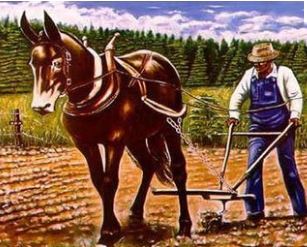
I choose $150,000 because although there may be places much less expensive they typically may need much more sweat equity even to basic systems which may be more than most would want to take on.  My own place was $43,000 years ago but that was my no running water story.  Most would not consider it.  By now some of you may have visions of the homestead act and be familiar with the phrase "40 acres and a mule" solution of yesteryear and that is exactly the idea but geared toward modern know how. Most of us would be dumbfounded at the idea of hitching up a plow to begin a self sufficiency lifestyle though I for one would definately apply if the opportunity came up in certain parts of the country.


A couple things about my quick search that should be mentioned:
I have not seen or inspected any of the properties so cannot warrant their condition in any way.
Personally I would not buy a manufactured home since it is a depreciating asset but they are very popular because many are more concerned about newer than long term appreciation.  Financing is also very different.

Prices can vary much up or down depending on location in the country and all the features
Typically months have been involved in any property search I have been part of to compare prices, features, and benefits of the specific piece and the area.

I say all that only to say that I did this for fun and information not to present my best pick for an area.  Readers of this blog live all across the country and even the world and are in different financial situations so no one piece of property would be relevant to all.  You can use the realtor.com link to play around with this yourself.

One thing right off the bat I need to say about almost all rural property.  It does not have city water or sewer.  To some that might be obvious but to me it was a complete shock.  Wells and septic systems are the norm here and the first thing to learn about.  It's fun to study the incubation of chickens but quite another to spend thousands of dollars to replace a well or septic that does not function properly.  It is especially a headache if one has never heard of such a thing.

So just for a time of playing around on the internet here are a couple of starting points.  Be sure and click them to look at the land.  An acre is quite different than a back yard.  All rural properties are completely individual.
Property Listings:


Lewis County WA

Lodi, CA

Carbondale, IL


Another thing to consider about moving to a rural area is income.  Many do not have any sources.  They are going through an economic downturn just like the cities.  Most people CANNOT make a living off of a farm of small size despite ideas, books, and dreams to the contrary.  So would might have the easiest transition to a rural life?

  • Those willing to commute to employment.  This could be up to 1 - 2 hours depending on location.
  • Those whose business is independent of a job such as computer based options.
  • Those with retirement or disability income but still able to do manual labor to some degree. 
  • Those with equity in a current home of investment that would allow a cash purchase of property leaving only minimal monthly expenses.
  • Truck drivers
  • Athletes or other traveling professions that just need a home base for their families
  • Investors wanting to buy land now and build a home later.
  • Flat broke and willing to live off the land in more primitive conditions.
  • RV dwellers who get land with power, water, and septic while they travel at will.
  • Those who have a good paying job but want their family home outside the city.  I have a friend whose husband had a high paying job in the city and maintained a very minimal apartment for the work week and came home to the family each weekend.
  • Those with skills that would be used in a very small town like teachers, bankers, some medical professionals, and grocery store workers.   I have seen many small businesses fail over the years not because they were not good but because the town did not have the population or disposable income to support it.

In summary I guess it would be accurate to say that it would NOT work for the AVERAGE person.  Though there is nothing wrong with being average most are very dependant on the regular paycheck which is not always available in small towns.  At one job I applied for the owner responded "No, no one has died lately" of course meaning that was the only way they had job openings.

If one is looking for cheap housing but doesn't want the fuss of a small farm small rural communities also provide a home that might fit the bill.  Use the website to find some in your desired area.

Book and Blog links you may enjoy:

Simply Self Sufficiency

5 Acres & A Dream

Books on Self-Sufficiency on Amazon.  If you see a title that interests you check your local library for availability.

Sunday, August 12, 2012

Drought - 2nd hit to the American Economy?

A few extra minutes at lunchtime allowed me to scan the MSN news to find out what was going on in the country.  As usual the top stories revolved around what prominent actresses were wearing and who they were seen with,  the U.S. participation in the Olympics, and who said what about the upcoming presidential election.  Buried in the corner was a small headline about drought conditions.  I clicked on it with memories of what happened in Texas only last year.  The only way to describe my reaction was:  Appalled.  I was appalled at how widespread the drought already was and I was appalled that the news which is supposed to be our lifeline to the facts of what is going on in our country had so effectively buried the information thus skewing our perception of its impact and importance.

Being a native of Washington State which is known for its rain, evergreens, and rivers, lakes and access to the ocean it is difficult for me to imagine what a drought even looks like.  We rejoice in the few days a year it does not rain and pour water upon us from the sky.

So I grabbed some pictures off the internet to give me a better idea of what was going on:


The crops most affected so far are corn and soybeans and the conditions are said to be the worst since 1956.  It would be easy to think that we could easily pass up our fresh corn on the cob this summer but remember corn is one of the main crops for raising dairy and beef animals and is a key component in ethanol which is used in gasoline.
  
Recently I did a post about the change in the farming population in this country.  We are down to 2% of our population who are still living on commercial or private farms.  And now this 2% is in trouble.  This could affect us all.  We are relying on a fraction of the population to provide our entire food crop and when they are calling for help and sounding the warnings we need to listen.

My mother was an example of preparation.  Each winter she would put a blanket, extra coat, boots, and a flash light in the truck of the car...just in case.  She had adequate insurance of all types...just in case.  And, we all knew where the candles and matches were in the house...just in case.  I admit that I use my mom as the example here because I was the one always walking out the door without the coat, without the umbrella, and without any preparations for the just in cases in life. 

What can or should we do regarding the conditions and seem to be heading our way?  First, I definitely do not have all the answers but a few things immediately come to mind.

1. Pray.  Not everyone is willing to do this but thankfully in this case the majority does not rule.  In fact the scripture itself is directed to a select group.

2.  Start or increase a food storage program now while things are available and affordable.  There are a number of posts on this blog which give ideas about this and links on the right hand side.  This will not only allow you to save money and provide for your family but can help displace some of the demand if supplies become limited.

3.  Plant fruit trees.  If you have even a small yard investing in one or more fruit trees can help in the preparations to establish  local food commodities.  If you have no land community gardens are a way to participate.  These are easy to locate...if you have a computer available google for the one closest to you.

4.  Read, talk to people and get ideas for your own best ideas.

5.  Be aware of what is going on and pass the word.  Some may think that all they need to do is provide for their own family but this is sadly naive.  If people become hungry many throw the rules of social ettiquette aside.

Hopefully though prayer and preparation any hardship can be avoided or minimized.  However, ignoring the situation may not be the wisest choice.  My own plans may take up to 5 years to have fully in place so I am thinking on the long term not just the immediate needs.  This is not intended and should not be construed as a message of fear.  When our alarms go off in the morning we do not run screaming out of the house.  However we should get up and be ready.  We can only hit the snooze so many times before we find ourselves late.  Far better to get up and be on time.

Here are more articles on the subject and searching under "2012 dought" will provide many others. 

All purple lettering indicates a link for more information.
 
Added note on Sept 7, 2012:
Well CNN is now also publishing information about a predicted food crisis in 2013, read the article here, published on Sept 3, 2012 Opinion: Global food crisis in 2013

Tuesday, March 27, 2012

Manna from Heaven

The front yard had a big shade tree.  Every summer I would take my lawn chair and sit beneath it to read, relax, and catch the breeze.  It was covered with green things at certain times of the year that I didn't think too much about assuming they were horse chestnuts or some other strange and poisonous thing.  The blue jays also loved the tree and I loved watching the blue jays from the kitchen window.  This picture is much like the tree that was in my own yard. 

A number of years passed and I mowed around the tree without giving it a second thought.

I don't know what happened, it must have been the weather conditions or just a day for me to have a special treat.

I walked out and all the green outer shells had burst and as I walked under the tree much to my surprise and delight the entire ground was covered with WALNUTS!  I was so taken aback that at first I wondered how they got there and who would have scattered walnuts in my yard.  Some days I am not as bright as others to be sure but I guess having lived there already for a number of years and not been aware that I lived with a walnut tree it caught me off guard.  You see, the blue jays had caught on to a secret and not yet told me.

It was so exciting!  Imagine going out in the morning and finding a yard full of nuts.  It was like Easter eggs.  I went and grabbed a bucket and started gathering them all up.  First I filled a pan, and then another, and then went and got a 5 gallon bucket and filled that too!

Although I have always loved plants, animals, and trees until that moment I don't think I really realized just how magical they really are.  Maybe the better word is miraculous.  The experience filled me with childhood wonder.  Of course it sounds silly.  I was almost 50 and had picked apples off the trees since I was a child and still have the scar on my foot from falling out of the tree that dad sent me up.  But walnuts!  Now that was just something else again. 

Since that time I have a new goal on my list.  I want to plant a nut orchard on my acreage back home.  It may not be this year but the time will come.  And, not only walnuts but also filberts and any other nut tree I can get my hands on.  I'm not sure that I have tasted a Filbert but I like the name, it sounds like a cartoon character and is fun to say.

At this point I could go into the varieties of nut trees available, the growing conditions, the protein they contribute to the diet and other health benefits and at some point I probably will.  But for today let me just say that if it looks like this:

It may be a Walnut tree.


Sunday, March 18, 2012

American Food Crisis - The Emperor's New Clothes

My uncle George was a meat and potatoes man.  Every night on the dinner table was basically the same.  It was almost a joke to the family because any variation to the theme was met with a reminder of what an appropriate dinner was. 

Each day at the England house there was a piece of steak, potatoes, a vegetable, and bread with honey.  The bread was not the standard Wonderbread but was usually homemade brown bread.  The honey was in a little bear dispenser.   Desert was rare in the household.

This meal seemed odd to me because at our home casseroles reigned but in retrospect the same principles applied. We referred to it as the four basic food groups. I understood this not because the adults in my life explained it but because the schools showed a chart.


Michelle Obama has taken steps to remind us of the importance of healthy eating.  For this she has received both praise and criticism.  I for one am happy that she is using the platform she has to promote such a basic and yet neglected topic. 


Bad eating habits like anything else do not happen overnight - they happen one meal at a time. I have to continually remind myself that carrots are better than cookies when I grab a snack. I continually have to make a conscious effort to not have that extra cup of coffee that I love so much.  More importantly than my own personal choices is the children and the parents who are responsible for providing and building habits that will last a lifetime.

Rumors abound and are becoming reality regarding the possibility of rising costs of food and even possibilities of scarcity in America.  The recent Texas drought has indeed had a major impact on our food supply.  If we believe we can live a healthy life on potato chips and pop we are delusional.  Recently my own health has required me to cut back on salt.  What?  I don't even use a salt shaker so where is it coming from?

As we rush through our busy schedules we tend to just grab what is easily available and put it in our mouths and keep going.  Or, many now who are more conscientious have taken the opposite direction of believing that radical diets or vegetarianism is the answer.  As we continue to move in either of these extremes we are missing the basic, healthy lifestyle available to all of us.

There are many things I don't like about getting older.  But there is one thing I am wholly beginning to appreciate:  the longer I live, the more I see that the media and social waves are a bunch of b.s.  Coming from my farming experience I can use this phrase and know that the literal definition really does fit the situation.  It's just a mess that needs to be shoveled up and disposed of.

The idea of a food crisis in America, if one should occur, is a subject that increasingly strikes me as utterly ridiculous, contrived, and diabolical.  Why?  Do I think it could not happen?  Yes, I do think it could happen.  BUT,  an American food crisis would be like a man starving with a cupboard full of food that he will not eat.  I struggle to know the words of how to present this in such a way to make the point that to me is so obvious yet never mentioned.  It is almost like the story of the emperor's new clothes in the old folk tale.  If you are not familiar with the story here is a cute little 3 minute video.

To illustrate what I'm referring to let's look at the history of American Agriculture for a minute:

The following is excerpted from About.com
A History of American Agriculture 1776-1990
18501850
Total population: 23,191,786
Farm population: 11,680,000 (estimated)
Farmers made up 64% of labor force
Number of farms: 1,449,000
Average acres: 203
1850's
Successful farming on the prairies began
1850
With the California gold rush, the frontier bypassed the Great Plains and the Rockies and moved to the Pacific coast
1850-62
Free land was a vital rural issue
1854
Graduation Act reduced price of unsold public lands
1859-75
The miners' frontier moved eastward from California toward the westward-moving farmers' and ranchers frontier
18601860
Total population: 31,443,321
Farm population: 15,141,000 (estimated)
Farmers made up 58% of labor force
Number of farms: 2,044,000
Average acres: 199
1862
Homestead Act granted 160 acres to settlers who had worked the land 5 years
1865-70
The sharecropping system in the South replaced the old slave plantation system
1865-90
Influx of Scandinavian immigrants
1866-77
Cattle boom accelerated settlement of Great Plains; range wars developed between farmers and ranchers
18701870
Total population: 38,558,371
Farm population: 18,373,000 (estimated)
Farmers made up 53% of labor force
Number of farms: 2,660,000
Average acres: 153
18801880
Total population: 50,155,783
Farm population: 22,981,000 (estimated)
Farmers made up 49% of labor force
Number of farms: 4,009,000
Average acres: 134
1880's
Heavy agricultural settlement on the Great Plains began
1880
Most humid land already settled
1880-1914
Most immigrants were from southeastern Europe
1887-97
Drought reduced settlement on the Great Plains
18901890
Total population: 62,941,714
Farm population: 29,414,000 (estimated)
Farmers made up 43% of labor force
Number of farms: 4,565,000
Average acres: 136
1890's
Increases in land under cultivation and number of immigrants becoming farmers caused great rise in agricultural output
1890
Census showed that the frontier settlement era was over
19001900
Total population: 75,994,266
Farm population: 29,414,000 (estimated)
Farmers made up 38% of labor force
Number of farms: 5,740,000
Average acres: 147
1900-20
Continued agricultural settlement on the Great Plains
1902
Reclamation Act
1905-07
Policy of reserving timberlands inaugurated on a large scale
19101910
Total population: 91,972,266
Farm population: 32,077,00 (estimated)
Farmers made up 31% of labor force
Number of farms: 6,366,000
Average acres: 138
1909-20
Dryland farming boom on the Great Plains
1911-17
Immigration of agricultural workers from Mexico
1916
Stock Raising Homestead Act
19201920
Total population: 105,710,620
Farm population: 31,614,269 (estimated)
Farmers made up 27% of labor force
Number of farms: 6,454,000
Average acres: 148
1924
Immigration Act greatly reduced number of new immigrants
19301930
Total population: 122,775,046
Farm population: 30,455,350 (estimated)
Farmers made up 21% of labor force
Number of farms: 6,295,000
Average acres: 157
Irrigated acres: 14,633,252
1932-36
Drought and dust-bowl conditions developed
1934
Executive orders withdrew public lands from settlement, location, sale, or entry
1934
Taylor Grazing Act
19401940
Total population: 131,820.000
Farm population: 30,840,000 (estimated)
Farmers made up 18% of labor force
Number of farms: 6,102,000
Average acres: 175
Irrigated acres: 17,942,968
1940's
Many former southern sharecroppers migrated to war-related jobs in cities
19501950
Total population: 151,132,000
Farm population: 25,058,000 (estimated)
Farmers made up 12.2% of labor force
Number of farms: 5,388,000
Average acres: 216
Irrigated acres: 25,634,869
1956
Legislation passed providing for Great Plains Conservation Program
19601960
Total population: 180,007,000
Farm population: 15,635,000 (estimated)
Farmers made up 8.3% of labor force
Number of farms: 3,711,000
Average acres: 303
Irrigated acres: 33,829,000
1960's
State legislation increased to keep land in farming
1964
Wilderness Act
1965
Farmers made up 6.4% of labor force
19701970
Total population: 204,335,000
Farm population: 9,712,000 (estimated)
Farmers made up 4.6% of labor force
Number of farms: 2,780,000
Average acres: 390
1980-901980, 1990
Total population: 227,020,000 and 246,081,000
Farm population: 6,051,00 and 4,591,000
Farmers made up 3.4% and 2.6% of labor force
Number of farms: 2,439,510 and 2,143,150
Average acres: 426 and 461
Irrigated acres: 50,350,000 (1978) and 46,386,000 (1987)

If you don't look at anything else check out the first and last blocks and compare the percentage of the population compared to the farm population. In 1850 64% of the American laborforce was in the agricultural business or farmers.  In 1990 the percentage was 3%.  The population for the same periods went from 23,191,786 to 246,081,000. 

The question immediately jumps to my mind: Where is our food coming from?

With the growing population, logic would seem to indicate that there would be more involved in the production of our milk, vegetables, grains, and meat that sustain our lives but instead there is less. We know that much of this comes from the highly industrialized processes now employed for which there are benefits and disadvantages.  The ultimate reason we may have rising prices in food is not that we do not have the capability to have more food but rather we do not have enough farmers.

As I continued to explore this I found two interesting topics to google:  Agricultural Land In U.S and Government Owned Land in the U.S. When you click on the images button the actual maps are shown.  The results may surprise and shock you.  I may address this in a later post but not today.  While it is true that we are using more of our agricultural land than in 1850 this and the maps do not take into consideration just how much food Americans can grow in their own back yards if they choose to do so. 

Most surburban homes have space in the backyard for a few fruit trees, a vegetable garden, and some berries.  While your family may not be able to use an entire tree full of apples if all your neighbors planted also neighborhood trades or farmers markets could be made allowing an exchange and adding to the variety.   Sure we would still need to rely on our country neighbors to supply meat and dairy or those unemployed may consider this a good time to head to the hills.  That was how my own rural lifestyle began years ago.

Just as an experiment ask a 5 year old and a 15 year old "Where does our food come from?"  If their answer is "the grocery store"  then they too are already admiring The Emperor's New Clothes.

Monday, February 20, 2012

Back yard investment.

What do blueberries, rhubarb, and strawberries all have in common?
  • Easy to grow in small areas
  • Easy to prepare or freeze
  • All provide an excellent return on investment.
  • Great pies!
Living in the suburbs is not a reason for not having homegrown fruits and vegetables.  In fact, one of the biggest benefits to a small yard is the ability to putter out and pick yourself some fresh rhubarb for a pie or blueberries for your pancakes. 

Rhubarb.  Have you ever seen rhubarb growing?  It's pretty awesome stuff.  The leaves are huge and the bright red stocks are eye catching.  To harvest a stock you grab and pull.  I have landed on my behind many times pulling rhubarb but that's why you send the kids to do it as they will just laugh.  I have seen someone actually cut a piece off which I guess you can do but I think it's against the code.  The reason being that when you pull it out another stock can grow.  It is similar to pulling celery from the outside. 

Strawberries.  This year I have eaten more strawberries than I can remember.  The crop was amazing.  A plain strawberry is one of natures best treats.  Strawberries are prolific and send out runners so starting with a small number of plants can multiply in to a patch.


Blueberries.  Four bushes should be enough to eat all you want fresh and freeze some for pies, pancakes, and muffins.  They need plenty of water to produce those big luscious berries. Mom and I used to go out picking every evening and ate so many that we were lucky to get any into the house.


Each of these selections come back every year, need little pruning, and are extremely easy to grow.  Having nice fruit bearing shrubs was is an attractive selling feature of a home.  If you don't want a yard that looks like a berry patch you can intermix the plants with your other shrubbery for added color and texture.   Large pots or whiskey barrels can also provide a decorative piece.  Consult your local nursery for the best variety for your area and soil type.

PIES

Now for the real reason for the post. Pies. The selling of pies has become big business with prices ranging from $6 up to $15 or more.  Did you know that if you have your own fruit you can make a pie for about $2?  It's fun.  When my son was about 9 years old we started making pies.  It was part of his home school fractions instruction.  Once we were hooked we kept baking and started giving pies away. The next step was a farmers market and sold them one day.  He was even taking orders for them.  We had flour all over the kitchen.  If you have never tried either rhubarb or strawberry rhubarb pies they are available at most pie shops. If you would like some homework for this post you can drive down and have a piece just to see if you like it.

So there you have it.  In this post we have covered saving money, taking up gardening, baking, and a new family hobby.  Frugal living is not just about saving money, it is a lifestyle.

Related links:
Great pictures on rhubarb and growing other home vegetables. 
http://doorgarden.com/01/how-to-grow-forced-rhubarb
People interested in green living are going to be excited about Mother Earth News!
http://www.motherearthnews.com/Real-Food/Growing-Blueberries.aspx
 
I no longer have my old lifetime recipe box but I'll tell you my best kept never revealed secret.  Right before the pie is ready to go in the oven sprinkle about a teaspoon of sugar on the top of the crust.  It will give the pie a golden brown color and a tad of that sugar sparkle.
Here are links to strawberry rhubarb pie recipes:
http://www.foodnetwork.com/recipes/food-network-challenge/grandmas-strawberry-rhubarb-pie-recipe/index.html
http://angelinkitchen.blogspot.com/2009/05/strawberry-rhubarb-pie.html

Originally posted Aug 17, 2010

Sunday, December 12, 2010

My Dirt Garden

When we first moved to Winlock, Washington we lived in a 100 year old home that at first had no running water. 

Sunday, October 17, 2010

Johnny Appleseed

John Chapman was not yet 2 years old when his mother died during childbirth with her third child.  His father remarried and he and his second wife had 10 more children.  This family of fourteen lived in a poor small home.  His father worked three jobs to support them all.  John spent much time outdoors exploring the country just to get away from the too crowded home.

Monday, September 27, 2010

Ummm....Garlic.

Starting your own food production can be somewhat daunting for those who have not considered it.  Between the dirt, worms, and digging many may not sense the immediate appeal of the task.  That's why it may be good to start small and easy.  Something to stick your toe in the water without diving in head first.  Garlic might be a good place to start. 

Tuesday, July 27, 2010

An American Opportunity - Community Gardens

If you have never tasted a home grown tomato or fresh picked corn now is your chance for an amazing treat.  Community gardens are in full swing and the more volunteers they have the more they are able to produce.  You don't need experience, just a willingness to get your hands dirty. If you don't want to do that garden gloves are very affordable.  Wear your sunscreen and you can get a nice tan in the process.

Sunday, June 27, 2010

An Investment with Abundant Return - Fruit Trees

Most of us think of the stock market or real estate when we think of investing but there are many other ways of investing that can provide a return that can be fun and a new hobby. Fruit trees, berries, and even rhubarb can fall into this category.

Just to get your imagination going here are a few:                               
Apple
Peach
Plums
Blueberries
Oranges
Lemons
Pears
Grapes

I guess for those who feel more comfortable with the stock labels we can call them APP, PEA, PLU, BLU, etc.  A fruit tree normally takes about three years to begin bearing well which is faster than a savings bond.

Wednesday, April 21, 2010

How To Save on Groceries… By Growing Your Own | MintLife Blog | Personal Finance News & Advice

How To Save on Groceries… By Growing Your Own MintLife Blog Personal Finance News & Advice

It's planting time again! This year I'm very limited on time so I think that instead of trying to plant a big garden I will throw some lettuce seeds, cucumbers, and tomato plants in my flower garden to fill in the spaces. Why not? It's nice greenery and true to the "green" environment. Herbs can also have a fragrant smell.  I like the stevia that smells like licorace.  Fresh picked herbs can be added to your sauces.  You can also mix some vegetable types with your hanging baskets or planters. A nice conversation piece when the company comes.

If you are still not convinced that gardening is for you this article mentions blueberries, strawberries, and herbs which can come back year after year and have very little maintenance and lots of good eating. Don't forget grapes and rhubarb for pies (the leaves are poisoneous to many animals.)

A trip to the garden center of your favorite store can give you lots of ideas.  Gardening can be a wonderful family activity or a private getaway.  Here are some more articles to get your started.  Be sure and look at the photos and you'll be convinced:

http://containergardening.about.com/od/vegetablesandherbs/a/ContainerVeggie.htm

http://www.youtube.com/watch?v=3UDebM4zAdE  This one is a how-to video.

http://www.picsearch.com/search.cgi?q=Vegetable%20Gardening%20in%20Containers&start=1&t=PezR6dpQlxTX7dnbWf03JfnEGSymK0VJfKSwToBLn1Y%3D

Happy harvesting!