Showing posts with label Housing. Show all posts

Wednesday, September 26, 2012

The House Hunt was a success!

In July I mentioned that we were participating in a house hunt for a friend who is in Afghanistan and wanted a home for when he returns.  He gave us his criteria of price, bedrooms, features, and square footage.   Last week the search concluded, the deal is done, and the papers signed.  We had a blast!

Each week we would scour the new listings along with his wonderful agent Kelli and schedule appointments to do the look see often after doing a preliminary drive by to check it out.  We learned much along the way.  In previous house hunting it had often been what was called a buyers market.  A buyer would find a house they liked and make an offer often lower than the asking price and negotiations would begin with a conclusion usually resulting somewhere in between. 

This was entirely different.  Houses that would come up on Thursday, we would look at them on the weekend and by Monday there would be up to 15 offers on the house!  I had never seen anything like it.  Often in the short time we were scheduled to be at the house there would be someone looking when we got there and someone else waiting to look when we were finished.  There was 4 of us including the potential buyer that had to change our strategy after missing a number of really good houses.  We had entered what is called a sellers market.

Yes, prices are still low, interest is still low, but the available houses was also low.  One would not know it by looking at Realtor.com because the listings shown include: short sales, foreclosures, contingents, pending, and active.  The first 3 types are really not available and they radically increase the houses that appear to be available.  The actives on the list were the only possibility but we had to sift through them all to the real potentials.  The next step was to make sure they met all the buyers criteria which included a large lot and RV parking.  In this area that reduced the choices down to an average of two to four to look at per weekend.  Because the area also had a high foreclosure rate many of these were trashed and had smells that one could not imagine unless experienced with their own noses.  There was more than one home where the front door was opened and we walked away without entering.

Through a process of trial and error we learned that the only way one was going to buy the desired house was to up the offer over the asking price and make it the BEST offer on the table come Monday morning.  In order to insure that this could be done we first had to lower our search criteria price to allow for the buffer.  Our ebay experience helped here and got the adrenaline flowing.

Mind you the potential owner is sitting in Afghanistan during the entire process.  After anyone of the four of us would find a potential home, he would review it, "his team" would go visit it and as a group would decide if he would like it, then we would take pictures and send them to him and give  our recommendations from "okay", "good investment", to the top recommendation which was "BUY IT NOW".  With him giving the approval the offer was in play. 

It was so fun and crazy as we three women "the team" would discuss the pros and cons of the property and all the tidbits of positive or negative comments he had made on prior places so we got better at it and more unified as we went along.  One house that he was very excited about from the pictures and after seeing it we all had a flat "NO" and he stated that there was no way he would go against the word of three women.

After a few good deals were missed due to the competition the realtor found a house and an offer was made sight unseen by any of us.  Two days later the team of ladies went to look at it knowing the offer could be rescinded if it did not meet objectives.  We were more than pleased and the deal continued buy not without the expected multiple offers, renegotiation's, and haggling over the details.  The offer was almost pulled and just when it looked like it wasn't going through there was another turn around and all parties were able to come to an agreement.

The timing was absolutely perfect because the buyer was able to come and see the place in person before final papers were signed and he absolutely LOVED the place.

Making the deal even sweeter the renters who had been taking care of the place so well are staying on until he returns and are very happy that they don't have to relocate yet so they are able to meet their own house hunting goals in the future.

The pictures from Realtor.com have already been deleted but here are a couple to give a feel for the place:


Yes, the carpet is Berber.  It also includes four bedrooms, 3 baths.  Even after all the haggling that was done the price was probably less than half of what it what it would have been five years ago.  For those who have been waiting for a time to buy or refinance the fed also just announced that interest rates are the lowest since the 50s.


Sunday, September 9, 2012

Self-Sufficiency on 5 acres

The conversation started about food.  I mentioned that since moving to the city I could tell that the food I was eating was making me feel horrible and I'm putting on weight.  Remember, for years I lived in a rural community and was able to raise some of our own meat supply and had some locally grown produce.  All meals were cooked from scratch with the basics of meat and potatoes.  Now my meals are often fast food or processed food.  It meets the budget and the schedule but I often have cravings for good pot roast with gravy and mashed pototoes.  As we continued with the conversation it came back to my desire to get back to "living off the land".  I had not reached my goals yet but miss so many things about the lifestyle I loved and take each step forward hoping it will lead me back.

In 1988 when I first moved to the rural community I would take walks and everywhere I went people would wave at me.  It was so strange after living in the Seattle area all my life.  Seattle is also a very friendly city but not nearly as outgoing as what I was now experiencing.  I would smile and wave back all the while a little puzzled.  Grocery shopping was also a bit strange.  Whenever I shopped people were stepping aside moving out of my way.  It took me a while to realize it and then of course I wondered why.  After consideration I laughed when I realized that I approached my grocery shopping like a mad woman on busy mission.  Others sensing my hurry would give me room to zip down the isles.  I slowed down after that and started to move with the flow of shopping cart traffic.

Many had moved to the community around the same time I did.  There was a new emphasis on self-sufficiency, homeschooling, and everything country which I didn't know was happening as my move had been made purely for economic necessity.  More on this story in previous posts and the In The Trenches book.

After the food conversation and my recent trip back to the area my mental engine and longing has been revved up.  Everything in the news indicates that that there are very good reasons why one might want to be out of the cities now or in the near future.  Just out of curiosity I checked realtor.com to see what a five acres and a home would run.  Notice that I like most country people list the acres or barns first and the house is a bonus to the deal.  In many rural communities the homes are 100 years old.  Of course they have the new homes and even mansions but they are far from the track homes of America suburbia. 

My search only had 2 criteria:  Over 5 acres and under $150,000.  The reason 5 acres was chosen is that this is the typical amount needed to be self-sufficient in being zoned for and raising ones own food including beef.  Some get by with less if they raise pigs but as I am not a pork eater for many reasons this is not a consideration for me.  I have raised beef for meat and dairy, goats, sheep, and poultry.  Horses were also on the top of my dream life list so pasture was an important priority.

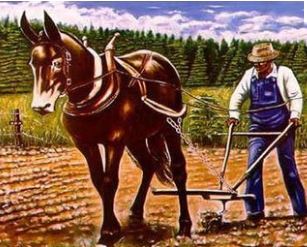
I choose $150,000 because although there may be places much less expensive they typically may need much more sweat equity even to basic systems which may be more than most would want to take on.  My own place was $43,000 years ago but that was my no running water story.  Most would not consider it.  By now some of you may have visions of the homestead act and be familiar with the phrase "40 acres and a mule" solution of yesteryear and that is exactly the idea but geared toward modern know how. Most of us would be dumbfounded at the idea of hitching up a plow to begin a self sufficiency lifestyle though I for one would definately apply if the opportunity came up in certain parts of the country.


A couple things about my quick search that should be mentioned:
I have not seen or inspected any of the properties so cannot warrant their condition in any way.
Personally I would not buy a manufactured home since it is a depreciating asset but they are very popular because many are more concerned about newer than long term appreciation.  Financing is also very different.

Prices can vary much up or down depending on location in the country and all the features
Typically months have been involved in any property search I have been part of to compare prices, features, and benefits of the specific piece and the area.

I say all that only to say that I did this for fun and information not to present my best pick for an area.  Readers of this blog live all across the country and even the world and are in different financial situations so no one piece of property would be relevant to all.  You can use the realtor.com link to play around with this yourself.

One thing right off the bat I need to say about almost all rural property.  It does not have city water or sewer.  To some that might be obvious but to me it was a complete shock.  Wells and septic systems are the norm here and the first thing to learn about.  It's fun to study the incubation of chickens but quite another to spend thousands of dollars to replace a well or septic that does not function properly.  It is especially a headache if one has never heard of such a thing.

So just for a time of playing around on the internet here are a couple of starting points.  Be sure and click them to look at the land.  An acre is quite different than a back yard.  All rural properties are completely individual.
Property Listings:


Lewis County WA

Lodi, CA

Carbondale, IL


Another thing to consider about moving to a rural area is income.  Many do not have any sources.  They are going through an economic downturn just like the cities.  Most people CANNOT make a living off of a farm of small size despite ideas, books, and dreams to the contrary.  So would might have the easiest transition to a rural life?

  • Those willing to commute to employment.  This could be up to 1 - 2 hours depending on location.
  • Those whose business is independent of a job such as computer based options.
  • Those with retirement or disability income but still able to do manual labor to some degree. 
  • Those with equity in a current home of investment that would allow a cash purchase of property leaving only minimal monthly expenses.
  • Truck drivers
  • Athletes or other traveling professions that just need a home base for their families
  • Investors wanting to buy land now and build a home later.
  • Flat broke and willing to live off the land in more primitive conditions.
  • RV dwellers who get land with power, water, and septic while they travel at will.
  • Those who have a good paying job but want their family home outside the city.  I have a friend whose husband had a high paying job in the city and maintained a very minimal apartment for the work week and came home to the family each weekend.
  • Those with skills that would be used in a very small town like teachers, bankers, some medical professionals, and grocery store workers.   I have seen many small businesses fail over the years not because they were not good but because the town did not have the population or disposable income to support it.

In summary I guess it would be accurate to say that it would NOT work for the AVERAGE person.  Though there is nothing wrong with being average most are very dependant on the regular paycheck which is not always available in small towns.  At one job I applied for the owner responded "No, no one has died lately" of course meaning that was the only way they had job openings.

If one is looking for cheap housing but doesn't want the fuss of a small farm small rural communities also provide a home that might fit the bill.  Use the website to find some in your desired area.

Book and Blog links you may enjoy:

Simply Self Sufficiency

5 Acres & A Dream

Books on Self-Sufficiency on Amazon.  If you see a title that interests you check your local library for availability.

Sunday, July 29, 2012

Can't see the forest for the trees

Learning to control our spending through budgeting requires an attention to detail that many of us are not in the habit of exerting. Watching every dime, keeping receipts, records, and analysing each of them is not always fun. In our effort to curb we watch unit pricing, sales, and bemoan our morning stop for coffee. All that is a good start to examine and change any wasteful or less than useful habits. The downside is that we can become so absorbed with the details that we lose sight of the big picture and begin to be hyper vigilant in the little things, making ourselves miserable while missing the bigger picture.

The old expression for this is "can't see the forest for the trees"

More than once I have caught myself figuring what sacrifice I can make to save another $10 and have been told I am able to squeeze Lincoln until he squeals. That's good but there are other times when I have missed big things while I concentrated on the details.

This is where goals become such an important first step needed before making a budget. Since I wrote the post titled Who wants to be a Millionaire? it really got me thinking...

Most of us want and hope for the same things at least as the basics:
  • An education
  • A home
  • A family

Our approach for the most part has been as follows:
  1. Graduate from high school
  2. Go into debt getting an education if scholarships have not been received
  3. Rent a place to live
  4. Get married
  5. Have children (for 30% of women number 4 and 5 are reversed)
  6. Buy a house
  7. Put kids through college or let them go into debt
  8. Struggle, remain in debt, or work on getting out of debt for 30 years
  9. Have a midlife crisis
  10. Save money (or not) and long for retirement
  11. Retire

All these steps are taken to achieve those 3 goals mentioned above.

What if we were to change the order of the steps to the following? Of course, it would have to be modified to the individual for we all know that when love enters the door all else takes 2nd priority whether we intend for it to  or not:

  • Begin saving money while living at home as discussed in Who wants to be a Millionaire?
  • Prepare for college by achieving academic excellence
  • Attend higher education using scholarships and/or saved money and parental assistance acquiring no debt
  • Get married
  • Work as a two income family to prepare for the purchase on a home in cash.  Use the income of one person to save and the second to live on thus learning to live on a single income.
  • Have children.  One parent could stay home avoiding all daycare costs.  A home business could also be developed
  • Home school child or any 2nd parent income for private education.  Why not put academic excellence for our children all through their years instead of waiting until they are 18?
  • (Remember the house was paid off before having children so all that is needed is for food, clothing, and transportation which should be manageable on one income)
  • Any 2nd income could be dedicated toward children's early and secondary education or savings for the future. 
Yes, this is an idea and not a common plan  or experience so statistical verification is unavailable.  However, I have heard so many times:
  • We have to have two incomes to live
  • We can't afford private school

Housing is the single biggest expense for most of us. How we choose to handle it can easily become the dictating factor in our budget. 

I love Jacob's book and blog Early Retirement Extreme.  The one subject he does not deal with in detail is those who do want to own a home and have or plan to have children.  Using the strategies as a basis the plan can easily be adopted for those who do want to have a prosperous family life.  I cannot fathom what it would be like to own a home outright at age 25 but I can certainly imagine it.

We need to try and see the forest through the trees so we are able to make the best decisions for ourselves and our families.  Did I know this at age 16, 25, or even 40?  No, time, experience, prayer, and watching the daily news has shown me there is a better way than the road of the average.


Thursday, July 5, 2012

The house hunt is on!

Since my early years I have loved to snoop around vacant homes and even inhabited homes.  I love houses! Old ones, new ones, perfectly maintained and trashed. All have a story to tell and their own personality given to them by their design and by all the people who have lived in them throughout the years.  It may have all started with one of my children's books titled The Little House by Virginia Lee Burton. 

Through the years vacant homes have intrigued and inspired me to jump out and do a little tour.  I enjoy "The Street of Dreams" and touring old mansions and rehab projects.  I have dragged my children along and one son has been in real estate for years so sparks do turn into flames.  I too had the opportunity to work for a small real estate broker and when clients would come in they would tell me their wish list and I would search high and low to find the home that might just fill their needs, wants, and desires.  When a match was reached it always warmed my heart to know that I had been a matchmaker to help find a house that would become a home.

Recently we found that a friend who is working overseas wants to buy a house in this city when he returns.  And the hunt is on!  He was hesitant to have us assist in the looking not wanting to be a burden but after convincing him that it would be a pleasure, in fact a treat, to help with the search he agreed to let us help.  Cannot help but wonder if the pleading convinced or scarred him. 

Realtor.com is recently my most visited site.  I have looked at probably 100's of photos so far and the last two weekends have gotten to hit the road and peak in windows evaluating the merits and shortcomings of a few properties.  As the search continues questions are raised like "how much does landscaping cost?",  "what is the value of this tile vs. carpet?", "the house is a mess but the neighborhood is great, is it worth taking on the project?", "Does it meet ALL the friend's criteria and more?", and "why would anyone paint something that color?".  Finally, "what does the house FEEL like?".  Some would think this crazy but some houses have a calm feeling and some feel creepy and it is usually not based on visual impressions.  So far we have not been inside any homes and that is when the senses are raised.  How can the details all be taken in and compared to all the others that have been seen?

The PERFECT house and deal is out there.  The challege is the hunt of finding it.  It is boring, frustrating, trys the patience, fun, and compelling, and invigorating all that the same time.  I know the day will come when I walk in the door and am able to say "THIS JUST MIGHT BE THE ONE". 

In the meantime the search goes on...

Sunday, June 24, 2012

What is $100 worth?

This may be one of the most important posts I will write to influence or change the way we think.  The concept is so simple but one that we don't often contemplate.  We have become so accustomed to being led by common thinking and financial "experts" that we often do not consider the math. 

Here is the question:  What is $100 worth?  The answer of course would seem to be $100 but when the subject of savings or investment comes up maximizing our spending habits we realize that the purchasing power can be radically different based on whose hands the $100 is in.  For one person it could be a night on the town and another food for 2 weeks.

When it comes to investing it is even more tricky.  Savings accounts currently pay almost no interest so are not beneficial except as a security and mental motivator for when just starting out keeping the money in a secret spot makes just as much sense.  For other investments few profits are guaranteed and even some with mutual funds took a beating during the ups and downs on Wall Street.

Another alternative is available that most of us skip over feeling we are using a teaspoon to move a mountain so give up before we start.  Today I will throw out the idea and may come back to it in the future.  Yes, at first glance it seems so boring that you might groan but before you do just take a look at the bottom line. 

Years ago when I did residential property management I was introduced to a website called BANKRATE.com I spent hours running numbers and developing scenarios using their mortgage calculator.  It is an invaluable tool that can save you thousands of dollars and will tell you what most lenders will not.  After all, they do make their money off interest payments.

This is very personal in that as I mentioned I now find myself with a mortgage payment in excess of the position I was once in and have contemplated much where to go from here especially in today's economy.  My goal is debt free and as the years to retirement lessen and the desire to do my own thing increases lately my musings have been almost daily.  Some of the things I had hoped to accomplish by this time was having the house paid off and placed in trust. 

What is $100 worth?

The chart below shows what the monthly payments on a $100,000 loan for 30 years at 6% interest would be.  We will use this as our baseline for comparison purposes only.  To customize this to your own unique situation go to the BANKRATE site and play with it.

Now, what if you could spare or reallocate $100 a month to an extra principle payment?  What would that look like?


The thing most important to notice here is the bottom line.  What is the new pay off date?  9 years have been cut from the payoff date.  So a little more math here:  9 years times 12 months = 108 months.  108 months x $599.55 which was the monthly base payment is a whopping $64,751.40.  Subtract from that our $100 per month that we have now paid for 252 months totaling $25,200 and our saving is $39,551.40.

So we can either say that our $100 a month payment is now worth $64,751.40 or we have made a profit of $39,551.40.  What better or more sure investment is available?  What better reason to make the adjustments needed to get it done.  Yes, it may require some juggling to accomplish it but 9 years less on a mortgage is certainly a noticeable improvement.

So what if after all the number crunching you (I) can't come up with $100?  How would $25 extra a month look? 

The payoff is 3 years earlier.  Again the math: 3 x 12= 36 months.  36 months times $599.55 = $21,583.80.  Subtract from that the 324 months the amount was  paid each month totalling $8,100 and the profit is $13,483.80.

The calculator also offers other options such as annual payments (tax return?) or one time payments.  The site itself has additional calculators that are easy to use and can help with many financial decisions as the computer has done the work for us.

Sometimes the simplest answers are in fact the right answers.  Just like compounded interest can work in the banks favor so can compounded payments work in the favor of the one with the loan.  Although I am not attempting to provide nor should this be construed as professional advice I hope that this tool will assist in your own decision making processes and lead you to seek the advice of your own tax accountant or whatever resource you choose.

 What is $100 worth?  A whole lot more than I thought.
 

Tuesday, June 5, 2012

What is your house worth? When?

Last week I had the opportunity to reflect on one of the most interesting financial cycles.  In Seattle there is a neighborhood called Leshi.  It was developed in around 1900 by the very wealthy of the city.  The huge Victorian homes have been standing for more than 100 years.  They are three and even four stories high with all the scrolled detailing both inside and out that marked the era.  Clearly the homes of the wealthy.

Time passed and the neighborhood went into disrepair.  The aged homes were vacated for newer more modern homes outside the central area of the city.  They were purchased at lower prices and as the times changed they were often divided into multiple units and rented as apartments.  The neighborhood continued to decline and crime continued to rise making the area not only undesirable but even unsafe to live in.  Those who stayed were limited in funds so the houses stood unchanged except for a coat of paint or a maintained lawn.  Some were even boarded up and left in their standing condition.

The city continued to grow and sprawl for miles while the rhododendrons and roses continued to grow and bloom in Leshi.  Families moved in and families moved out and blocks away gunfire often sounded striking down the lives of those who lived there.

Then a turning point came and the old grand houses became noticed again.  The proximity to the city business was just a short drive or bus ride away.  The homes began to be purchased and restored and renovated to their original grandeur.

The view of Lake Washington and the Bellevue skyline which did not even exist now graced the view from the balconies.  I was told that even a home that had not been renovated except for a coat of paint was now $800,000 and the prices only went up from there.

I had the opportunity to stay at one and I could not help but run my hands down the original 5 panel doors with their crystal doorknobs and walk across the original hardwood floors.  Beautiful!

Sunday, March 25, 2012

Roommates

There has been a revival of the extended family for living situations and along with it a growing number who find that roommate opportunities can provide an economically less stressful way to have a roof over one's head.

A quick look at craigs list provided the following ads:

$550 Room in great house, great neighborhood
 

Private room in large house with large yard in great neighborhood. Full house privileges. Includes all utilities, pool and jacuzzi, satellite TV with movie channels, pool table, horseshoes, garage parking. Smokers and pets welcome. Positive people preferred. 
$250 Furnished Room for Student/Intern *Utilities Included*

Room is spacious and furnished
Closet and drawers for easy organization
Large windows open to a wide green and gorgeous view of Central Park
Utilities included
Central Park is right across the street, good to relax, go for a run
Safe, residential neighborhood at all hours

$500 / 4400ft² - Spacious Downstairs Room For Rent w/Private Bath ALL FURNISHED
We are a quiet American Asian family with 2 college girls looking to find a quiet, responsible room mate to fill in our 1 downstairs bedroom in our house. As you can tell from the pictures below, we live in a spacious 4000+ square feet home at Mountains Edge. Your rent will include brand new furniture, a private bathroom, internet, laundry and kitchen privileges. We also conveniently live right next to the explorer's peak park. Due to the household being mostly girls, we do prefer a female room mate. Smoking is ok outside, dogs are ok if they are potty trained (we have a small doggy door) Please SERIOUS INQUIRIES ONLY.
image 0image 1
image 2image 3

Yes, the last one is nice!!

What makes a GOOD roommate?  Some of the things that pop to mind are:
  • Clean and one who picks up after themselves
  • Financially responsible once the rent is agreed upon it should be paid as top priority
  • Verbally positive, considerate, and keeping noise levels at a level that does not disrupt others.
  • Considerate of the personal boundaries of others and their possessions

In contrast, What makes someone a BAD roommate?
  • Messy, does not keep their space or community spaces picked up.  Leaves dishes in the sink and laundry on the floor
  • Financially irresponsible and pays their share of the expenses inconsistently
  • Verbally rude, grouchy, cusses, yells, loud when people are sleeping, foul language
  • Inconsiderate of the space and possessions of others
  • Sexually parading partners throughout the home or lewd personal habits such as pornography
  • Drug or alcohol use and any associated behaviors and risks.  Who really wants to get busted for someone else's pot habit?
Character
As I thought about it I concluded that much of it all boils down to good habits, good character, and common courtesy.  How simple is that?

Family
As I reflected even further I wondered how many families can say that all members treat each other with the same respect that we would hope and expect from strangers?  How many divorces or relationship breakups are caused by any of the above?  How many children are mercilessly yelled at?  How may spouses have to put up with drunkenness, pornography, or have to go around picking up after another?  How many teenagers blast the music or have rooms that look like a tornado has hit?  Or, the newest social phenomenon highlighted by the media of hoarding? Those are some of the biggies but what about the little things like leaving the toilet seat lid up?

We are born into families but how many enter friendships or relationships with others where not even these basic minimal courtesies are extended?  It's often easy to spot them even on the street - the one who leaves garbage at the bus stop or doesn't take back their own shopping cart.  At work we see the growing tendency to not hold doors or take the last of the coffee without making more. 

Words for the day:
Character
Courtesy

We need to not only expect it from others, train our children, but above all tolerate nothing less from ourselves in whatever living arrangements we are in.

Wednesday, November 2, 2011

The quiet invasion of America

Sometimes being right makes me sad and in this case it just ticks me off.  Consider this new article from the Wall Street Journal -

Foreigners' Sweetener: Buy House, Get a Visa

In essence it is new bi-partisan legislation that will further attract and reward the investment of foreign money into the purchase of land on American soil.

Remember what we used to say daily with our hands on our hearts?

"I pledge allegiance to the flag of the United States of America.
And to the Republic for which it stands
One nation under God
Indivisible with liberty and justice for all."

A nation can be taken in many ways.  The two most common are militarily and financially.  I am a  supporter of legal immigration but believe it should be done with knowledge, conditions, and with stipulations. My own great grandparents immigrated from Germany.  It is essential for someone who lives in America, and, especially one who purchases land to know and be required to pledge allegiance to the Constitutional principles this country was founded on.  Further they need to defend them as the needs arise. This goes beyond merely speaking the words and includes a history of life and practice dedicated to those principles.

In a review of my soapbox articles I warned that a foreign take over of land would be the next big step coming in the housing crisis.  Some time has passed and there are new readers to the blog so I wanted to raise the attention again hopefully as a siren to those who still love this country and in recognition of those who have served and died to defend and protect it.

Remember that banks now own outright over 12 million homes taken through foreclosure the last time I looked and they have one goal: to make money. 

Posted October 6, 2010
Did you see this article in Time Magazine? I thought the writer did a good job researching home ownership trends back as far as 1900 and outlined government involvement through tax advantages and loan programs. After Housing Bubble, the Dark Side of Homeowner Dreams - TIME.  In reading the comments it can be assessed that many were rattled by the article.  I'm not sure if it was her statistics or her conclusions that jarred people.  Although I don't necessarily agree with her conclusions I did think she brought up some valid points.

I am going to suggest that there is a plan in motion that is so diabolical that it would seem to come from a "I'M GOING TO RULE THE WORLD" action flick. This is the question that I have been asking myself lately and chewing on the possibilities. "After Housing Bubble..." What next? If you have been reading my previous posts on the U.S. Economy you know that I believe the housing crisis was no accident and part of a bigger plan. So what next? Where are we going from here? I would like to share a few observations and thoughts that I believe deserve further research.  If you know any resources or links you can point me in the right direction I would appreciate it.  I believe this topic is HUGE and this my first attempt to identify the next step of this UFO that is overshadowing the American Economy.  I can see it but am not yet sure what it is.

A short summary of the housing crisis so far and what I think Phase 4 may bring:

As an investor, what would you do if you owned a number of homes and the prices were down? Would you sell low or would you hold on to them and rent them out until prices and buyer demand went up again? If we can answer that simple question maybe we could figure out what is going on in the national economy. What works on a scale of a few would also work on a scale of millions.
Phase 1 - The bubble. Banks loosen credit requirements and people are investing all they have in homes whose prices are going up at a record pace.  Many are getting rich in the process. People try and buy before they go higher thinking that if they wait they will miss their chance at a home and a investment opportunity.  For some this proved to be true.  For millions more it did not.

Phase 2 - The bubble bursts. Millions of foreclosures with banks taking 100% ownership of properties and all the cash down payments and monthly payments that have been made. Personal credit ratings ruined so people will not be allowed to buy for 5 to 10 years.

Phase 3 - Home prices and interest rates lowest in decades but news articles saying that homes are no longer a good investment and individuals discouraged to buy. See cover story of Time magazine. The almighty credit rating of so many has been ruined by the first hit so even with money available they are unable to jump on the BUY LOW INVESTMENT OPPORTUNITY.

Phase 4 - This is where I'm watching for the next move. What I suspect is happening is that now that banks own so much property they will hold it and go into the property management business through secondary sources. Since they own the homes 100% the rent received will be pure profit (less taxes) and no equity is acquired by the resident. In a few years people have their credit magically improved and/or will realize that they have been scammed again and will start buying but prices will already be on the rise.

The scenario makes me shiver.  How much power and money is enough? 

One important note to make is that the term "home ownership" is very misleading. 


I was vividly reminded of this about 2 years ago when I forgot to make a $15 line of credit payment.  I received a notice from Chase that my home was now in default on my mortgage!  It took me hours of canned music and false starts to even find what the problem was and when I found the mistake I immediately paid the line of credit payment with the late fees.  But guess what?  That was not enough.  Chase had reported to the credit bureaus that my actual mortgage payment was late and my credit score was dropped by more than 100 points with a red flag on my mortgage even though my mortgage payment was on auto-deduction and therefore NEVER late.  I spent at least 60 hours making phone calls and writing letters and even contacted an attorney.  I was told that the way Chase reported it would stand even though I could clearly show two separate account numbers.  C'est l'vie. Am I still angry?  Not so much, but it did open my eyes and I started looking around and asking the logical question "What in the world is going on here?"  And then I got furious!  

Shrouded in mystery.
Understanding the economic crisis is like putting together a 1000 piece puzzle without the benefit of the box top.  By looking at the colors and patterns of the individual pieces little sections begin coming together.  As a person who enjoys good detective novels and has been employed as an analyst it is an interesting task.  The most fascinating part of the entire thing is that a person would want to believe that all are seeking the truth so that good solutions would be found.  Not true.  The goal of many is clearly to make the most money possible before the rest of us figure it out.  Politicians want to stay in power.  The media wants ratings.

Watching MSN and then FOX about the same news stories it is obvious that they are not reporting the news but that they are promoting an agenda. How can two recountings of "eye witnesses" be so different?  Sifting through the rubble of information and words is challenging.  No wonder so many end up turning off the t.v. and getting on with their lives.  Worse are those who repeat what they hear without question or thought.  To put it bluntly - they are almost all a bunch of liars.  Do you remember the old game show "To Tell The Truth"?  This is the game they are playing with the American people.  Most I believe (or hope) are not even doing it on purpose.  We can all miss the forest through the trees and have our own viewpoints interpret what we see.  I'm just as susceptible as any to this and that is one reason I try to receive information from both ends of the spectrum on any subject that interests me.

Unanswered questions.
It is amazing how difficult it is to find the answers to specific questions with all the abundance of information on the Internet.  To know if what I am referring to as Phase 4 I need answers to the following questions:
  1. How many homes have been foreclosed by bank?
  2. How many homes does the bank now own 100%?
  3. How does that compare to previous periods?
  4. How are these distributed between the BIG bankers and the community bankers?
  5. Are foreign investors allowed to purchase these homes?
  6. How many "qualified" buyers are there now?
  7. What is the average amount that credit scores have dropped since the crisis began?
  8. What % equity do home buyers now have in their homes?  Underwater, break even, equity percents?
  9. What is happening with bank owned homes?
  10. Are banks freeing up credit for private investors to purchase multiple homes if they meet credit requirements? 
  11. Are those who have been foreclosed have high debt balances from shortages of funds collected?
  12. How much cash money have Americans actually lost in down payments?  (I talked to a neighbor who lost $100,000)
  13. Why are the bankers fighting so hard against the efforts to provide home buyer bailouts?
  14. Why are these numbers so hard to find?  Is someone trying to hide something?
My theory.
If I am correct about Phase 4 we will continue to see a trend of bank foreclosures, stagnant loan modifications, media discouragement to buy homes, and the banking industry stepping in as "property managers".  Of course they will continue just enough "business as usual" to camouflage what they are doing.  Why split the profit if by holding their investment they can gain far more?  It's too early to answer the question but not too early to ask.  And watch.  Am I a conspiracy nut?  Not really but when I smell something fishy I begin looking for fish.  You may not agree but you can throw out the theory in a discussion and see if others get riled up.  I'm willing to take the rap as "the crazy one".

If you have any book recommendations or links to statistics on this subject please let me know.

Included are the comments from the first time this was posted that give more of the statistics that were located.

Friday, November 26, 2010

Book Review - The Housing Boom and Bust

The Housing Boom And Bust by Thomas Sowell

A friend recommended this book because she felt it had a unique perspective on the housing crisis.  In that I have to agree.  The author has removed most of the accountability for the the housing crisis from the banking industry and placed it on the politicians and their agendas spanning back for more than 20 years.  Although I don't agree with this overall conclusion I do think that he did an excellent job at gathering statistics and building his case.  He also sited specific times that warnings of the pending crisis went unheeded and were even covered up. For this reason I felt it was a valuable read to fill in some of the blanks.  The contents include:

Wednesday, November 10, 2010

Homes for Under $100K - Yahoo! Real Estate

Homes for Under $100K - Yahoo! Real Estate

Have you checked the housing prices lately?  If you are considering buying for a personal home or investment the prices and interest both make it a very attractive buyers market place.  While it's true that sellers are not in the best position and may have to hold, what we are seeing is the about the only good news about the housing crisis.  That is the opportunity for the average person to begin long term investments in real estate.

I have written a number of posts regarding the housing crisis and being a first time landlord so if you would like more information check the catagory on the side.

Nothing is more important than doing your own homework so that you can be informed and come to a decision that works for you and your family.

Sunday, November 7, 2010

Housing Options

There was an old woman who lived in a shoe... The story stays in our minds because of the unique and interesting place she choose to live. Where we live has a dramatic impact on our lives, options, and sense of well being. Most of us have the mental picture of the suburban home with the white picket fence, children playing in the yard and a swing set in the back. This is the most commonly accepted picture of what we all refer to as The American Dream. In recent years that vision has been expanded to a bigger house with nice cars in the front and a landscaper mowing the lawn.

Tuesday, September 28, 2010

Room for Rent

Open-door policy
The word itself brings up ideas on times long past and encounters with mysterious strangers. Movies have played into the mystic of the evil stranger out to manipulate and control a family or other unfortunate outcome. With this impression it is no wonder that the idea of being a boarder or taking in boarders has gone out of vogue. At one time in this country it was a popular way for people to save money or for a home owner to bring in a little extra. The current economic situation has brought the option back into the realm of consideration especially for single people. Why spend all the money to rent your own place when for a fraction of the cost a room can be rented to help accelerate other financial goals such as debt repayment, building a savings, or having more disposable income. After all, most people are on the go all day long and grab meals at restaurants so why spend all the extra to maintain a place when you are rarely at home?

Tuesday, August 24, 2010

Nearly 50 percent leave Obama mortgage-aid program - Yahoo! Finance

Nearly 50 percent leave Obama mortgage-aid program - Yahoo! Finance

The biggest question that comes to mind when reading an article like this is, "why"?  The loan modification program was to be one of the corner stones of the recovery package and benefit millions of Americans.  After the inflated prices of homes and the predatory loans offered to customers the loan modification plan was supposed to bring things back into balance and allow the foreclosures to stop.  Citizens were to have the value of their homes reviewed and payment plans adjusted accordingly with fixed rates.  What happened?  The news story would lead one to believe that it was the plan itself or the government bureaucracy.  The article even suggests that it was the homeowners themselves who failed to follow through with the proper paperwork.
I don't buy it.  Not for a minute.  And, here's why:

At the end of 2009 there were 3,356,844 estimated eligible 60+ day delinquency.  As of the end of the year only a measly 66,465 loan modifications had been approved by the major banks.

Wednesday, June 9, 2010

the-housing-market-recession-is-not-over: Personal Finance News from Yahoo! Finance

the-housing-market-recession-is-not-over: Personal Finance News from Yahoo! Finance

Time will tell the facts of these assertions but I for one strongly agree. Important information for those making critical housing decisions at this time. Whether you want to buy, sell, invest, or just hang on the housing market is still in flux. When neighborhoods have almost half of the houses empty it's hard not to ask the questions.

See my June 1, May 10, and June 3, 2009 postings for more information on this subject.

Note added June 15, 2010:  Here's another very good article that speaks about what economists are projecting for the near future.  http://finance.yahoo.com/news/How-to-Plan-For-a-DoubleDip-usnews-2055778412.html?x=0

SmileyCentral.com

Tuesday, June 1, 2010

Owners Stop Paying Mortgage ... And Stop Fretting About It - Yahoo! Finance

Owners Stop Paying Mortgage ... And Stop Fretting About It - Yahoo! Finance

One of the most interesting and controversial effects of the economic crisis is the growing number of Americans who are choosing to walk away from their homes and mortgages to wait for the foreclosure to take place. The reasons are many:
1. Underlying anger at financial institutions for creating the mortgage crisis.
2. Personal frustration at a banks unwillingness to work with the home owner to find reasonable solutions.
3. Viewing the home as a losing investment in the current market conditions.  Dumping the home like you would dump a losing stock.
4. My credit is messed up anyway so what difference does it make?
5. Others are doing it, why not me?
6. They view it as a necessary step for their own survival as it has come down to a choice between food and the mortgage payment though income reductions brought on by job loss and then when calling to work out payment arrangements reaching a customer service representative overseas.
7. Those not behind may view it as a step to their living under their means strategy.
8. Some view the move as a step of consumer solidarity in protest of the strong arm tactics they feel banks have usedin mortgage repayments, credit cards, and overdraft fees.

The opposing argument is:
1. The view that if you signed on the dotted line it is your moral obligation to pay.
2. The more people that abandon their homes the greater it will impact the entire economy.
Joe Plemon at Personal Finance By The Book has written a very good post making a number of thoughtful points as to why walking away is not a good idea.  His readers have also provided some lively comments. The link is at the bottom if you would like more information. 
The fact is that whether you personally agree or disagree, whether you feel you need to take this step or not, it is happening all over the country and is the next big wave to redefine the American Economy. The effects will impact the housing market for years.  Personally, I'm not so sure that the issue is even about housing anymore as much as it is about consumers saying "no" to the banking industry.  The American people are going on strike.

Am I offering any advice?  No, I'm just watching along with the rest of the country and trying to maneuver through my own In The Trenches experience.  What do I think will happen?  I'm not sure but a couple of things seem evident:
1. The number of foreclosed houses will continue to grow and effect the value of all homes.
2. With this fall in prices the local governments should lower property taxes to the new lower assessed value. But, that is unlikely and so we need to be watchful of other new inventive ways in which county governments will try to make up for lost revenue.
3. The lost revenue from mortgage payments and no bailout can put the large banks in big trouble so watch where you put your money especially if you invest in mutual funds that are comprised of mortgages.
4. Those that have saved money and kept their credit rating decent will be in a position to invest in real estate at lower prices though it may take years to see the value go back up.

I am not and do not profess to be an economist. These are my understandings and opinions and should not be used for making your decisions.  All we can do is pay attention and be very prudent. 

In a post I wrote on June 3, 2009 called the future of the American Economy I stated that I believed that what we were experiencing was just the first wave.  This is the beginning of the second.  Government resources for assistance are being exhausted and many families are still not where they need to be to weather the storm but the sirens are still sounding.  Save money, get out of debt, live within your means.  It only sounds dramatic because it is.

I hope you will take a few minutes to read some of the posts in the American Economy category and continue to read whatever you feel is valid and trustworthy.  There are many excellent blogs and websites to give tips on everything economic and the latest news and commentary on changing events. Staying away from all the political hype can be difficult but by listening to a number of different sources and then comparing what you see with your own eyes things become more clear.  And, then just keep working your plan.  In God We Trust....

Be it ever so humble, there's no place like home.
SmileyCentral.com

Link to Personal Finance By The Book:
http://personalfinancebythebook.com/what-is-%E2%80%9Cstrategic-default%E2%80%9D-and-should-you-consider-it/

Link to Owners Stop Paying Mortage... And Stop Fretting About it - Yahoo! Finance
http://finance.yahoo.com/news/Owners-Stop-Paying-Mortgage-nytimes-4276925797.html?x=0